From Grove to Glass: We Spent a Day Inside an Orange Vodka Distillery
There's a moment about twenty minutes into every distillery tour where someone inevitably asks the question. You know the one. It's usually delivered with a raised eyebrow and a half-joking tone that doesn't fully hide the suspicion underneath:
"So... is there, like, actual orange in this?"
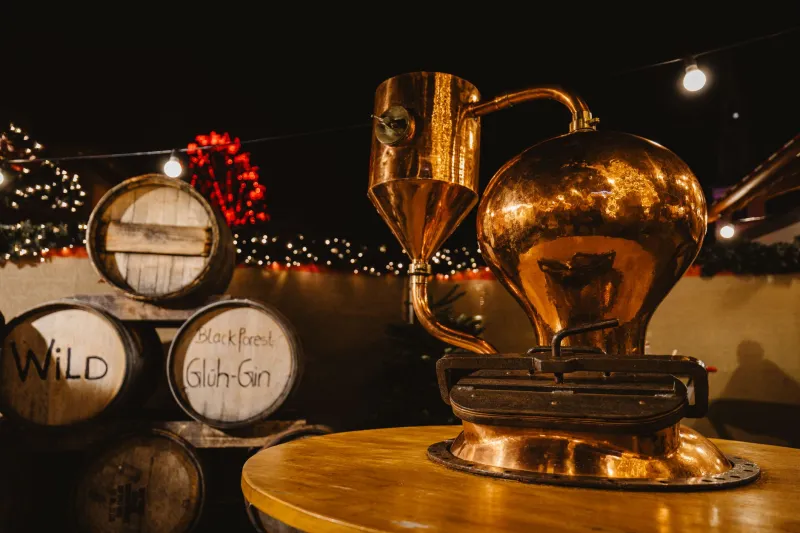
We drove down to a craft distillery just outside Orlando to get a real answer — not a marketing one. What we found was messier, smarter, and honestly more fascinating than either the skeptics or the hype accounts would have you believe.
The Grove Comes First
Before you can talk about distilling, you have to talk about fruit. Florida grows the majority of the oranges used in American citrus spirits, and the supply chain starts earlier than you'd think.
"We're tasting fruit in the spring for fruit that gets distilled in the fall," our guide — let's call him Ray, a third-generation distiller who talks about oranges the way sommeliers talk about terroir — told us as we walked a row of Valencia trees. "Same fruit, different blocks of the grove, wildly different character. Sun exposure, rainfall, even which side of the highway it's on."
The oranges destined for flavor extraction aren't the pretty ones you'd put in a fruit bowl, either. Cosmetic perfection doesn't matter when you're after oil and juice. What matters is oil concentration in the peel and sugar-acid balance in the flesh — the stuff that actually survives the distillation process.
Pressing, Peeling, and the Part Nobody Photographs
Here's where most people's mental image of flavored vodka falls apart. A lot of folks assume the process goes something like: buy oranges, drop oranges in vodka, wait.
Not even close.
The real work starts with the peel. The oils in citrus zest — limonene and a whole supporting cast of aromatic compounds — are the backbone of any legitimate orange spirit. Distilleries extract these oils either by cold-pressing the peels or by steam-distilling them separately before anything touches the base spirit.
"The peel is the treasure," Ray said, holding up a flavedo-covered strip of rind. "The juice is great, but the peel is where the aromatics live. If you taste an orange vodka and all you get is sweetness with no brightness, somebody skipped the hard part."
The juice itself often gets pressed and reduced separately, then blended back in careful ratios. Too much and you get a syrupy, shelf-unstable mess. Too little and you've got vodka with an orange-scented apology attached.
Real Fruit vs. Natural Flavors: The Uncomfortable Truth
Now for the debate. The internet has decided this is a binary: "real fruit good, natural flavors fake." Ray's take is more nuanced — and more honest.
"'Natural flavors' is a regulatory term, not a quality grade," he explained. "Under FDA rules, a natural flavor has to be derived from the actual source. An orange-derived natural flavor came from an orange. What people should actually be asking is how much of the formula is real fruit material versus lab-isolated compounds, and whether the result tastes like a living orange or an orange-scented candle."
His litmus test is simple: pour a little over ice, let it sit for five minutes, and smell again. Genuine citrus oils open up as they warm. Artificial flavorings tend to flatten out or turn soapy.
"If it still smells like you just zested an orange over the glass, somebody did the work," he said. "If it smells like the cleaning aisle, well. Now you know."
Where the Vodka Part Comes In
All that citrus character needs a stage, and that's the base spirit. Quality orange vodka starts with a neutral grain spirit distilled to a high proof, then cut with filtered water to bottling strength — usually 80 proof, the American standard.
The blending stage is where the craft actually happens. Ray's team runs tasting panels through dozens of trial blends, adjusting oil content, sweetness, and acidity in increments so small they're measured in parts per thousand.
"Anyone can make something taste like orange," Ray shrugged. "Making it taste like orange and still drink like vodka — clean enough to mix, interesting enough to sip — that's the whole job."
Bottling Day
By the time we reached the bottling line, the mystery had mostly evaporated. Bottles get rinsed, filled, corked, and labeled in a satisfyingly loud mechanical ballet. But Ray stopped us before we left with one last thought.
"People think flavoring vodka is a shortcut. Done right, it's the opposite — it's more steps, more sourcing, more ways to mess it up. The shortcut is making something boring."
So the next time you pour a Screwdriver or shake up a citrus martini, you'll know what's in the glass: groves in full sun, presses working overtime, and a distiller somewhere in Florida obsessing over parts-per-thousand so your Tuesday night tastes like a good one.
Cheers to that. 🍊