The Bitter Half: Why Orange Vodka Shines in a Spritz
Orange vodka has spent years being treated like the friendly one at the party: easy to pour, easy to like, and easy to bury under orange juice and sugar. That reputation is not entirely wrong, but it sells the spirit short. The best thing you can do with an orange vodka is not hide its sweetness. It is give that sweetness something to push against.
That is where bitter aperitivo comes in. A little Campari, Aperol, or Cynar does not cancel out citrus. It sharpens it. Add dry vermouth and soda, and you get a spritz with more backbone than a mimosa and less fuss than a full cocktail program. For US home drinkers who want something bright, low-effort, and not candy-sweet, orange vodka is the bridge.
Why Bitter Makes Orange Taste More Like Orange
Sweetness alone is a flat line. Bitterness adds edges, and edges are where flavor lives. Think about a grapefruit peel or a burnt orange garnish: the bitter note makes the citrus read as more complex, not less. Orange vodka already carries that bright citrus character, and because vodka is neutral at its core, it does not fight the herbal, rhubarb, or artichoke notes in a bitter aperitivo. It sits between them like a translator.
Dry vermouth matters here too. It brings a savory, slightly saline quality that keeps a spritz from tasting like soda with a splash of juice. You do not need a fancy bottle. A basic French or Italian dry vermouth from the grocery store will do the job, especially if you keep it in the fridge after opening.
The result is a drink that still feels casual. You are not building a Negroni or measuring bitters into a tiny glass. You are making a spritz: ice, a few pours, a lot of bubbles, and a garnish that looks like you tried. That is the sweet spot for orange vodka.
The House Spritz Formula
Start with this ratio and adjust from there:
- 1 1/2 oz orange vodka
- 1 oz bitter aperitivo
- 1/2 oz dry vermouth
- 3 oz club soda, chilled
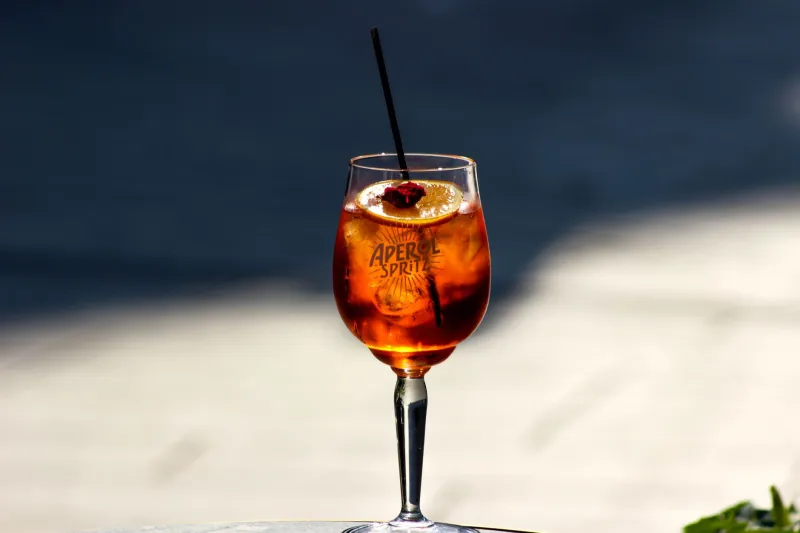
Build it in a wine glass or a large rocks glass filled with ice. Add the vodka, aperitivo, and dry vermouth. Stir gently for a few seconds, just enough to chill and combine. Top with club soda. Garnish with an orange half-wheel, a grapefruit peel, or a rosemary sprig. Do not overstir after the soda goes in unless you want a flat spritz.
If it tastes too sharp, add another splash of soda. If it tastes too sweet, add a little more dry vermouth or a squeeze of grapefruit. If it tastes too bitter, add a touch more orange vodka. The formula is a starting point, not a test.
Three Builds for Tonight
The Aperol Handshake
1 1/2 oz 4 Orange Vodka, 1 oz Aperol, 1/2 oz dry vermouth, 3 oz club soda, orange half-wheel.
This is the gateway spritz. Aperol is gentle and lightly bitter, with enough orange and rhubarb to meet the vodka halfway. The dry vermouth keeps it from drifting into soda-pop territory. It is the one to make for a friend who says they do not like bitter drinks, then asks for a second.
The Campari Commute
1 1/2 oz orange vodka, 1 oz Campari, 1/2 oz dry vermouth, 3 oz club soda, grapefruit peel.
Campari is louder and more firmly bitter, which makes it a natural partner for orange vodka. The grapefruit peel is not decoration; it adds a clean bitter citrus oil that ties the whole glass together. This is a good Friday-evening drink, the kind you make before deciding whether dinner is actually going to happen.
The Cynar Nightcap Spritz
1 1/2 oz orange vodka, 3/4 oz Cynar, 3/4 oz dry vermouth, 3 oz club soda, orange twist or rosemary sprig.
Cynar brings an herbal, artichoke-adjacent bitterness that sounds strange on paper and makes perfect sense in the glass. With orange vodka and dry vermouth, it becomes savory and refreshing at once. Serve it with salty snacks and call it an aperitivo hour, even if it is technically already past eight.
A Few Spritz Rules Worth Keeping
Use cold soda. Warm soda goes flat faster and makes the drink taste muddy. Fill the glass with fresh ice, not the half-melted cubes from the bottom of the freezer. And keep the garnish simple: citrus, herbs, or a single olive if you are feeling savory. A spritz is supposed to look effortless, not like a florist arrangement.
For a small group, batch the base. Combine the orange vodka, aperitivo, and dry vermouth in a pitcher and keep it chilled. Pour about 3 oz of the base over ice in each glass, then top with club soda individually. That keeps the bubbles alive and lets guests adjust their own strength.
The Case for Keeping It Bitter
Orange vodka does not have to be the sweet drink you graduate from. It can be the spirit that makes bitter cocktails more approachable, more citrus-forward, and more fun to drink on a Tuesday. A spritz is the easiest place to start. The formula is short, the builds are flexible, and the result is a drink that tastes grown-up without tasting like homework.
So yes, bitter is better. Not because sweetness is bad, but because contrast is interesting. Grab a bottle of orange vodka, a bitter aperitivo, and a dry vermouth. Add ice and soda. That is the whole argument, and it is a good one.